“The Chan School is foremost among the Five Great Schools of Buddhism [five types of buddhist study and practice] in that it transmits the Buddha’s Mind Seal, pointing directly to the mind so that one sees one’s nature and becomes a Buddha.
When the Patriarch Bodhidharma came from India, he widely propagated this method. At that time the practitioners of Buddhism were still very enamored of the language of prajñā, exerting their efforts in composition and phrasing, vying to outdo one another. Even in lecturing on the sutras they argued over each other’s strong and weak points, and in speaking Dharma they would praise themselves and deprecate others. Different schools were set up, and doing battle with words was the mode of the times. Some resorted to individualism, and in an attempt to be unique, they set up theories that were distinctly different from the mainstream, and they perfected the art of unobstructed and clever debate. People wrote books and set up doctrines, disparaging others while promoting themselves. In this way they forsook what was fundamental and pursued superficialities; the theories of teaching schools flourished widely.
“[The four main enlightened teachers in China just prior to the introduction of the Chan lineage were the Venerable Daosheng, Vinaya Master Daoxuan, the Great Master Zhiyi, and the Venerable Daoyuan. Each taught meditation in the context of the teachings of his own school. When the Venerable Daosheng was slandered, he retreated to Tiger Mountain and spoke Dharma to the rocks. From this came the saying that even ‘insentient rocks nodded their heads in agreement.’
Vinaya Master Daoxuan hid his tracks on Zhongnan Mountain, where he enjoyed the food-offerings of the gods. The Great Master Zhizhe (“Wise One”) [Zhiyi (Venerable)] proclaimed the Teachings, and the Master of Lu Mountain (Ven. Daoyuan) propagated the Pure Land method. Those to whom their teachings were transmitted held them in esteem, yet the scholars were confused by them. Everybody had a different opinion, and people were at a loss as to which way to follow. Standing perplexed at the crossroads, one didn’t know which way to turn. Gazing out at the vast ocean of different teachings, one could only heave a big sigh.
“In light of such circumstances, the First Patriarch Bodhidharma made amends for such biased teachings and patched up the flaws. His compassionate instructions were apart from speech; his teachings were not imparted through words. He taught that this mind of ours is none other than the Buddha, that the precious pearl hidden within our robe is not something obtained from outside. One only needs to concentrate one’s energy and refine one’s mind to a single focus, then:
One day suddenly all connects right through, and then the myriad substances are reached everywhere, whether external or internal, fine or coarse. The great functioning of the entire substance of the enlightened mind is nowhere without clarity.
One becomes open to the vast and ultimate enlightenment, returns to the source and plumbs the origin. At this time one can appreciate the subtlety behind this interchange: the World Honored One held up a flower, and Mahākāśyapa, the Golden-Hued Ascetic, smiled: originally it was like this!
“This method is one in which the mind seals the mind, a transmission [dharma transmission] outside of the teachings. One takes one’s own nature across. And after one has made one’s way across the river (of afflictions), one leaves the raft (of Dharma) behind. How can there be anything else but this?” (WM 70-71)
“The Chan of our sect does not set up (progressive) stages and is, therefore, the unsurpassed one. (Its aim) is the direct realization leading to the perception of the (self-)nature and attainment of Buddhahood. Therefore, it has nothing to do with the sitting or not sitting in meditation during a Chan week. However, on account of living beings’ dull roots and due to their numerous false thoughts, ancient masters devised expediencies to guide them. Since the time of Mahākāśyapa up to now, there have been sixty to seventy generations. In the Tang and Song dynasties (619-1278), the Chan sect spread to every part of the country, and how it prospered at the time! At present it has reached the bottom of its decadence (and) only those monasteries like Jinshan, Gaomin and Baoguan can still manage to present some appearance. This is why men of outstanding ability are now so rarely found and even the holding of Chan weeks has only a name but lacks its spirit.” (Luk, tr. “Master Hsu Yun’s Discourses and Dharma Words,” Ch’an andZen Teachings, Series One, 49-50)
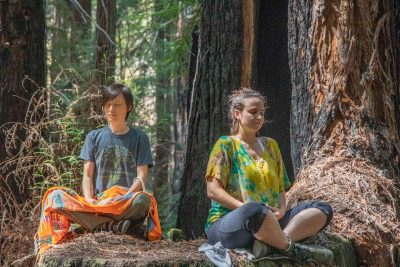
“One sits (in meditation) to cultivate the Dharma of Chan inquiry in order not to have any thoughts.…That which is called the Buddha is not even a single thought arising. But can you go without having a single thought arise? As you sit there, you think of all sorts of things you don’t ordinarily think of, and a lot of long-forgotten circumstances that suddenly pop up again in your mind.…Is that not having a single thought arise? Of course not. How do you do it? There is no way. There is no way to keep a single thought from arising—but you can keep a single thought from being destroyed. And if you prevent its destruction, you’ll keep it from arising.… For example, in the one thought, ‘Who is mindful of the Buddha?’ you can keep the ‘Who?’ going nonstop. ‘Who?’ This is searching for the ‘Who,’ not reciting ‘Who?’ As long as you keep searching, that single thought isn’t destroyed, and therefore it won’t arise. A single thought not arising is the Buddha. That’s the doctrine of the Chan School. If you can be such that not a single thought is produced or destroyed, then the light of your wisdom will appear.” (LY II 15)
禪宗 ; dhyāna
The general meaning of dhyāna is meditation.